
Species
Astragalus lentiginosus var. borreganus
Astragalus lentiginosus var.
Also known as: Borrego Milkvetch
Astragalus lentiginosus var. borreganus, commonly known as Borrego Milkvetch, is a perennial herbaceous plant native to the arid regions of southern California and parts of northern Mexico, particularly within the Colorado Desert and the Sonoran Desert ecosystems. This variety typically grows in sandy or rocky soils, often found in washes, slopes, and other disturbed areas. The growth habit of Borrego Milkvetch can reach heights of 30 to 60 centimeters, exhibiting a sprawling or upright form depending on environmental conditions and competition with neighboring vegetation.
The leaves of Borrego Milkvetch are pinnately compound, consisting of 10 to 20 leaflets that are small, narrow, and often glabrous, giving the plant a delicate appearance. The flowers, which bloom primarily in the spring, are arranged in racemes and are characterized by their distinctive yellow to purple coloration, attracting various pollinators, including bees. The fruit is a flattened legume pod that typically contains several seeds, which are dispersed when the pods mature and dehisce. This species plays an important ecological role by contributing to soil stabilization and providing forage for herbivores in its native habitat. Additionally, Borrego Milkvetch has been noted for its ability to fix nitrogen, enhancing soil fertility in its environment.
An interesting adaptation of Borrego Milkvetch is its ability to thrive in arid conditions, which is facilitated by its deep root system that allows it to access moisture from deeper soil layers. This adaptation is crucial for survival in the desert landscape, where water availability can be highly variable. The plant’s phenology is also synchronized with seasonal rainfall patterns, allowing it to maximize growth and reproduction during optimal conditions. Overall, Borrego Milkvetch exemplifies the resilience of desert flora and its intricate relationships with the surrounding ecosystem.
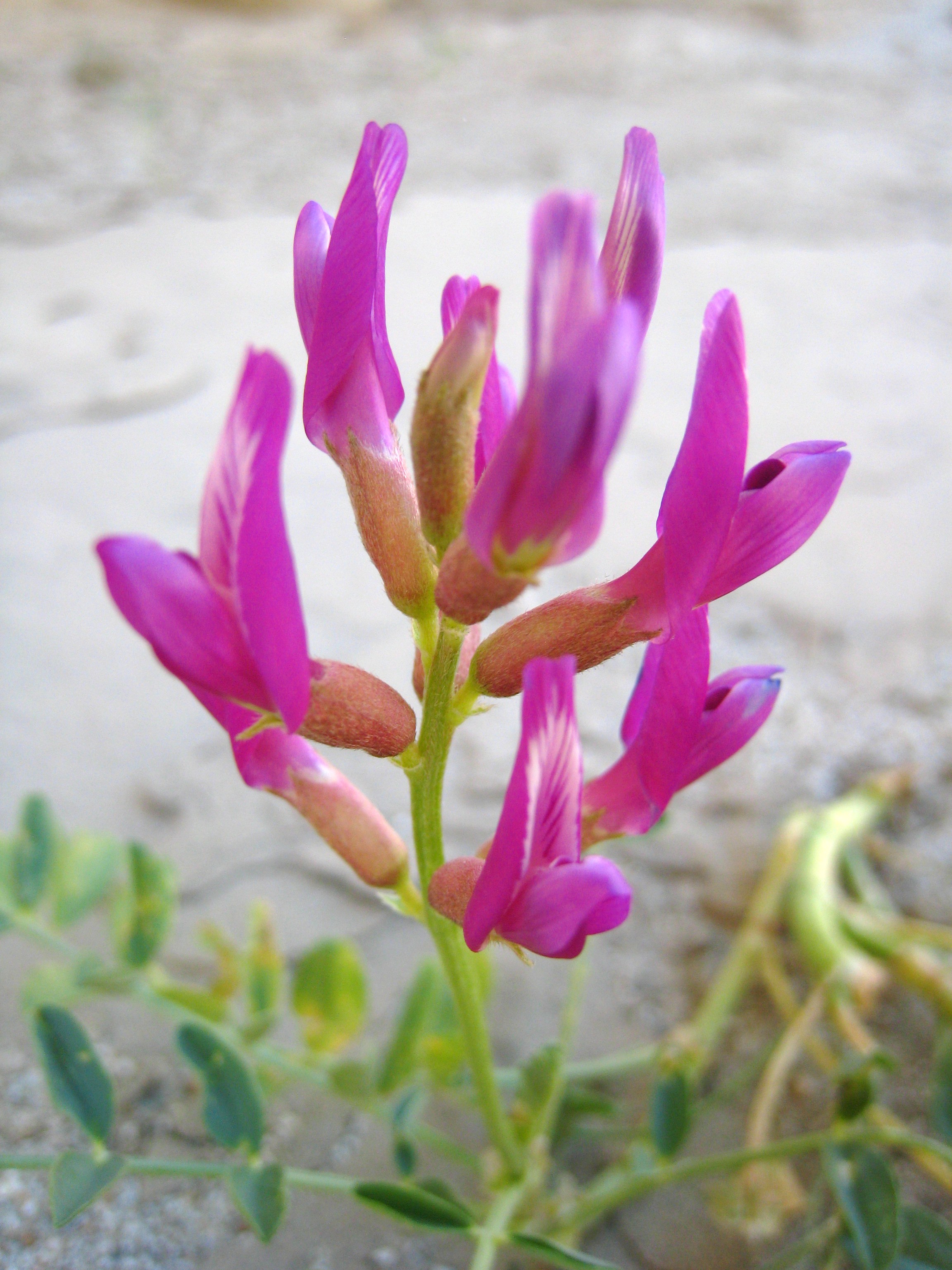
Plant images courtesy of Wikimedia Commons — a free media repository maintained by volunteers worldwide. Thank you — please consider donating ♥
No additional plant samples are currently filed under this species.
© Gnomeprints 2021
Design by ThemeShift.