
Species
Blepharizonia plumosa ssp. viscida
Big Tarweed is a drought-tolerant perennial herb native to California's coastal regions.
Also known as: Big Tarweed
Blepharizonia plumosa ssp. viscida, commonly known as Big Tarweed, is a perennial herb native to the coastal regions of California, particularly thriving in the chaparral and coastal sage scrub habitats. This species typically grows to a height of 1 to 3 feet, exhibiting a bushy form with numerous branched stems. The leaves are narrow, linear, and covered with a fine layer of hairs, giving them a distinctive gray-green appearance. The plant produces bright yellow flower heads that bloom from late summer to early fall, attracting various pollinators, particularly bees. The fruit is a small achene that aids in wind dispersal, allowing the plant to colonize new areas effectively.
Ecologically, Big Tarweed plays a significant role in its native habitat by providing nectar and pollen for pollinators and serving as ground cover to prevent soil erosion. It is well-adapted to its environment, exhibiting drought tolerance and the ability to thrive in poor soil conditions. Historically, indigenous peoples utilized the plant for various purposes, including medicinal applications and as a food source. Its resilience to drought and ability to flourish in disturbed soils make it a valuable species for restoration projects in California’s ecosystems.
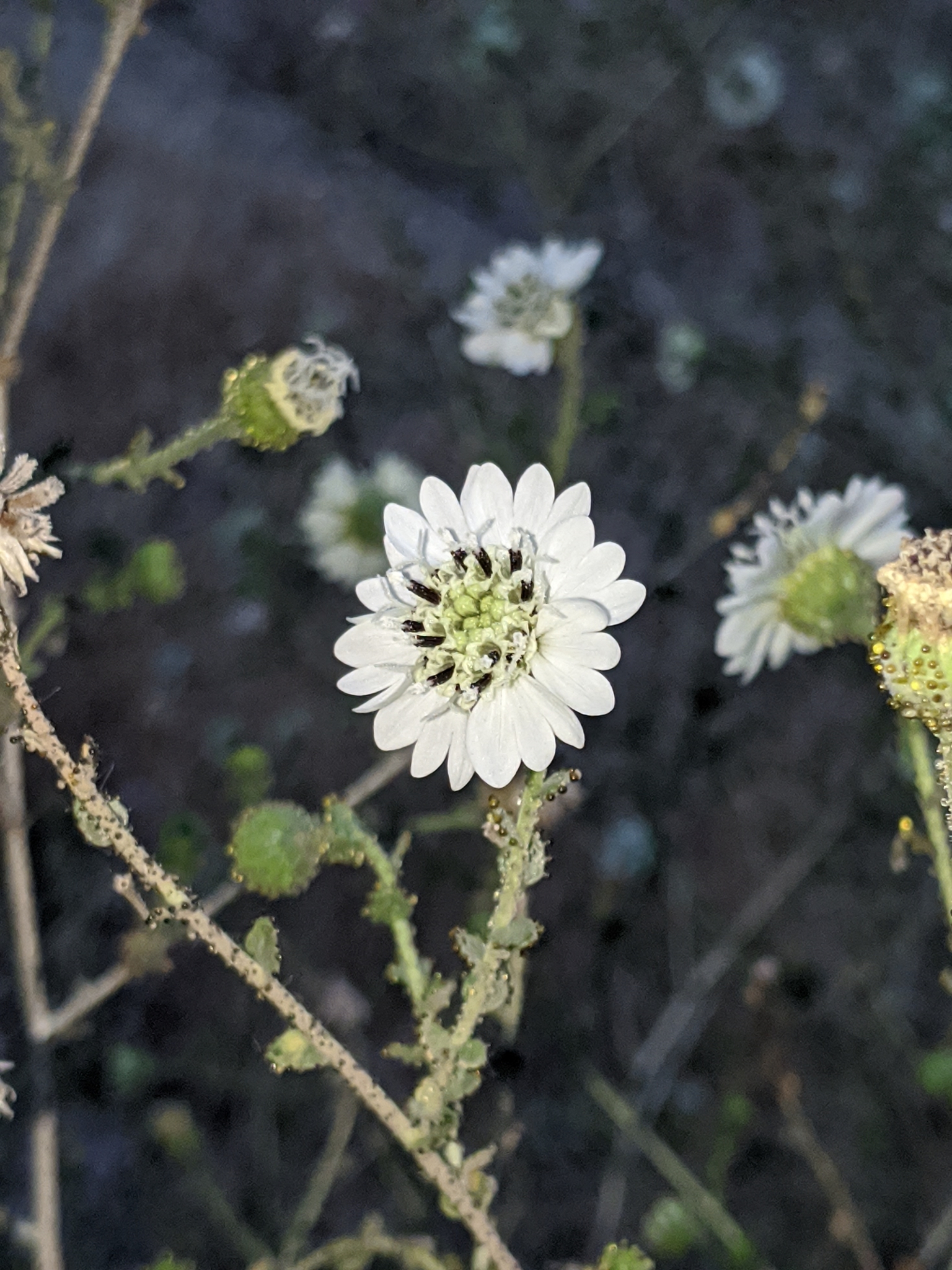
Plant images courtesy of Wikimedia Commons — a free media repository maintained by volunteers worldwide. Thank you — please consider donating ♥
No additional plant samples are currently filed under this genus.
No additional plant samples are currently filed under this species.
© Gnomeprints 2021
Design by ThemeShift.