Species
Echinacea purpurea
Also known as the Purple Coneflower or Echinacea purpurea, Echinacea is a native North American genus in the Daisy family. It’s not just a pretty face in the garden; it’s also known for its potential health benefits. In this blog post, we’ll delve into the world of Echinacea, exploring its scientific background, potential health benefits, and care instructions.
## Unveiling Echinacea
Echinacea, a member of the Asteraceae family, is native to the prairies of North America. It’s an herbaceous perennial plant characterized by its large, purple, daisy-like flowers. The plant gets its common name, Purple Coneflower, from the cone-shaped central disk of its flowers.
## Echinacea and Health
Echinacea is often associated with immune support and is a common ingredient in herbal remedies for colds and flu. However, scientific research on these benefits is mixed. Some studies suggest that Echinacea may have immune-boosting properties, while others find no significant benefits.
Interestingly, Echinacea has been found to have antioxidant and antibacterial properties. These properties, combined with the presence of terpenes, a diverse group of naturally occurring compounds, make Echinacea a plant of interest in the field of biotechnological applications and medicinal uses.
## Caring for Your Echinacea
Echinacea is a hardy plant that prefers full sun and well-drained soil. It’s drought-tolerant, making it a good choice for areas with low rainfall. Here are some tips for growing Echinacea:
1. **Light**: Echinacea prefers full sun but can tolerate partial shade.
2. **Watering**: Water your Echinacea regularly, but be careful not to overwater. Echinacea is drought-tolerant and can suffer from root rot if the soil is too wet.
3. **Soil**: Echinacea prefers well-drained soil and can tolerate a wide range of soil types, from sandy to clay.
4. **Feeding**: Feed your Echinacea with a balanced flower fertilizer to encourage blooming.
5. **Propagation**: Echinacea can be propagated by dividing the clumps in the spring or fall.
In conclusion, Echinacea is a beautiful and hardy plant that can be a great addition to your garden. Its potential health benefits, combined with the mental health benefits of gardening and interacting with nature, make it a truly powerful plant.
—
**References**
1. Sharifi-Rad M, Mnayer D, Morais-Braga MFB, et al. Echinacea plants as antioxidant and antibacterial agents: From traditional medicine to biotechnological applications. Phytother Res. 2018;32(9):1653-1663. doi:10.1002/ptr.6101
2. Cox-Georgian D, Ramadoss N, Dona C, Basu C. Therapeutic and Medicinal Uses of Terpenes. In: Medicinal Plants – From Farm to Pharmacy. Springer; 2019:333-359. doi:10.1007/978-3-030-31269-5_15
3. Anwar F, Latif S, Ashraf M, Gilani AH. Moringa oleifera: a food plant with multiple medicinal uses. Phytother Res. 2007;21(1):17-25. doi:10.1002/ptr.2023
4. Abeshu MA, Geleta B. Medicinal Uses of Honey. Biol Med (Aligarh). 2016;8(2):276. doi:10.4172/0974-8369.1000276

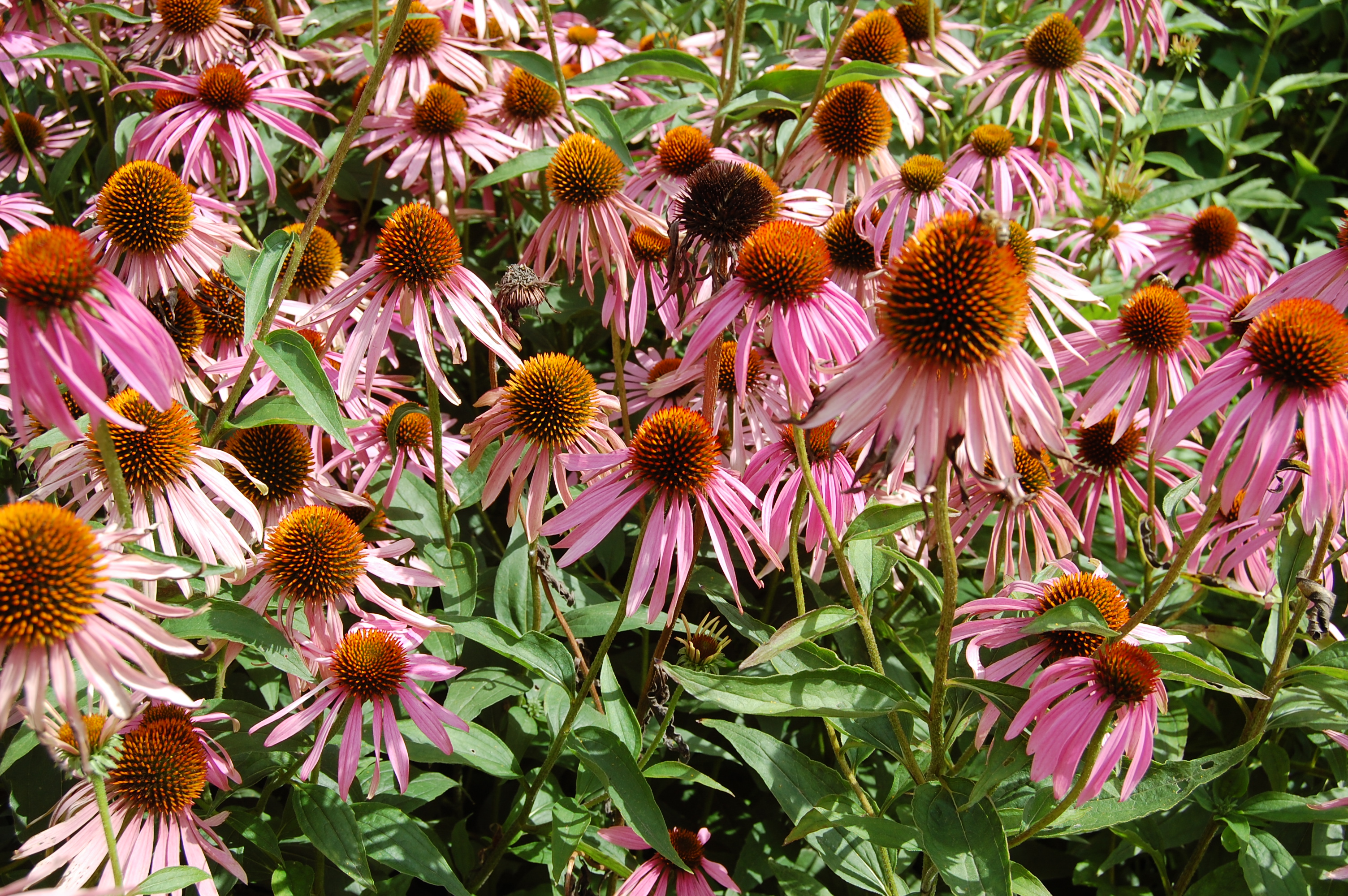


Plant images courtesy of Wikimedia Commons — a free media repository maintained by volunteers worldwide. Thank you — please consider donating ♥
No additional plant samples are currently filed under this genus.
No additional plant samples are currently filed under this species.
© Gnomeprints 2021
Design by ThemeShift.